Gate Types and Materials Across Metro Detroit
Compare the five gate materials 313 Gates builds and installs across Metro Detroit, or jump straight to the one that fits your property and budget.
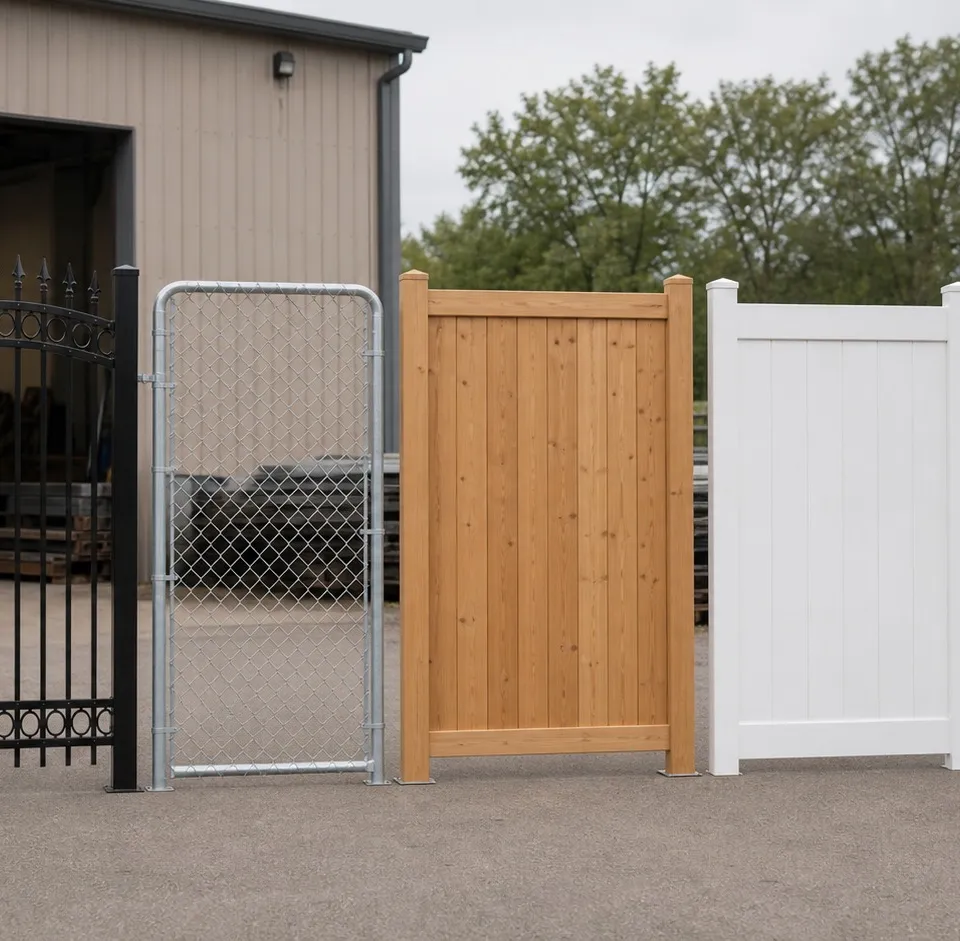
313 Gates builds, installs, and repairs five gate materials across Metro Detroit: custom wrought iron, chain link, wood, vinyl, and aluminum, each suited to a different budget, maintenance level, and look for driveways, yards, and pool enclosures. Iron carries the most craftsmanship and the most weight, both literally and on the driveway. Aluminum and vinyl trade some of that presence for lower upkeep, chain link is the quickest and least expensive route to a secure yard, and pool safety gates are built to close and latch on their own no matter which material frames them. Compare the five below, or jump straight to the one that fits your property.
Comparing the five gate materials
| Material | Cost band | Maintenance | Lifespan |
|---|---|---|---|
| Custom wrought iron | Highest investment, priced by size and design | Low, occasional rust check and repaint | Decades, often generations with care |
| Chain link | Most affordable | Low, hardware needs occasional tightening | Long, hardware typically outlasts the fabric |
| Wood | Mid-range | Higher, staining or sealing every few years | Moderate, depends on upkeep and exposure |
| Vinyl | Mid-range | Very low, never needs painting or sealing | Long, holds its finish without upkeep |
| Aluminum | Mid-range | Very low, rust-resistant powder coat | Long, holds up through Michigan winters |
Bands are relative, material to material, not fixed dollar figures. Every job is priced after an on-site look at the opening, ground, and design.
How a service call goes.
Questions, answered.
Which gate material is the most durable for Michigan weather?
Custom wrought iron and aluminum hold up longest against Michigan's freeze-thaw cycles and road salt, since neither rots and both take a rust-resistant finish. Chain link's galvanized coating also resists corrosion well. Wood needs the most seasonal attention, since staining and sealing protect it from moisture that iron and aluminum simply shed.
What's the cheapest gate material to install?
Chain link is generally the most affordable material for a given opening, since the fabric and posts cost less than iron, wood, vinyl, or aluminum and installation moves quickly. Vinyl and aluminum typically fall in a mid-range band. Custom wrought iron carries the highest investment because every gate is fabricated to the opening, not pulled off a rack.
Do all these materials work with an automatic gate opener?
Yes. Swing and slide openers mount to iron, aluminum, wood, and vinyl gates the same way, and chain link gates take an opener too once the frame and hardware are reinforced for the added weight and cycling. See gate opener repair and installation for how automation pairs with any of these materials.
What's the difference between a pool safety gate and a regular gate?
A pool safety gate isn't a separate material, it's any of the gates above, usually aluminum, chain link, or wood, built with self-closing and self-latching hardware so it shuts and locks on its own. See pool safety gate installation for how that hardware works and what to confirm with your local building department.
Can I mix gate materials with my existing fence?
In most cases, yes. A wrought iron or aluminum gate commonly gets paired with a wood or vinyl fence for a framed, finished look at the entry point, and chain link gates pair naturally with chain link fence runs. The gate and fence don't need to match material exactly, they need to match in scale and hardware.
How do I know which material is right for my property?
Start with what the gate needs to do. Security and estate presence point toward custom iron, budget and speed point toward chain link, low upkeep points toward aluminum or vinyl, and a pool enclosure points toward whichever material carries code-compliant self-closing hardware. A free on-site assessment confirms the right fit before any quote is written.
Does 313 Gates repair gates it didn't originally install?
Yes, across all five materials. Whether the gate is sagging iron, a bent chain link frame, rotted wood, cracked vinyl, or dented aluminum, a technician can diagnose and repair it on-site regardless of who installed it originally. See gate repair for symptom-specific diagnosis.
Custom Wrought Iron: Presence and Craftsmanship
Custom wrought iron is the material for a driveway or estate entry meant to be looked at, not just driven through. Iron carries scrollwork, panel detail, and a weight and finish that chain link or vinyl can’t match, and it’s built to the exact opening rather than sized off a factory rack. See custom wrought iron gates for the fabrication process, material grades, and what a custom design typically costs.
Chain Link: Fast, Affordable, and Built to Last
Chain link is the material for a property that needs a secure, functional gate without the cost or lead time of a custom build. It’s the most common gate material in the metro because galvanized fabric resists rust, hardware is easy to service, and a new gate or opener retrofit usually moves fast. See chain link gate installation for repair, installation, and opener pairing.
Wood and Vinyl: Curb Appeal Without the Iron Weight
Wood and vinyl gates give a driveway or yard entry a finished, residential look that pairs naturally with a wood or vinyl fence line. Wood takes stain or paint to match a house exactly; vinyl trades that customization for a surface that never needs to be repainted. See wood and vinyl gate installation for how both pair with an automatic opener.
The material argument almost always comes down to one trade: how the entry needs to look against how much upkeep you’re willing to give it.
Aluminum: Low Maintenance, Rust-Resistant
Aluminum is the material for a property that wants a clean, modern picket look without the upkeep iron and wood ask for. A powder-coat finish resists rust through Michigan winters and road salt without repainting, which makes aluminum a common pick for pedestrian gates and fence runs that get touched every day. See aluminum gate installation for pricing bands and where it fits best.
Pool Safety Gates: Code Comes Before Material
Most residential pool barrier codes care about that closing behavior, not which material frames it. See pool safety gate installation for what that hardware looks like and how to confirm your municipality’s requirements.
Choosing the Right Gate Material for Your Property
The right gate material comes down to three questions: how much upkeep you’re willing to do, how the gate needs to look from the street or from inside the yard, and what the gate is actually protecting. A security-driven estate entry leans iron, a budget-driven yard gate leans chain link, and a low-maintenance daily-use gate leans aluminum or vinyl.
Automation runs on every material the same way, so the opener decision doesn’t need to drive the material choice. If two materials still feel close, a free on-site assessment settles it faster than guessing from photos, since ground slope, opening width, and existing fence material often make the call for you.