Commercial and Perimeter Gates
Parking lots, loading docks, gated facilities, and storefronts across Metro Detroit. Tell us the property type and we'll spec the right entrance.
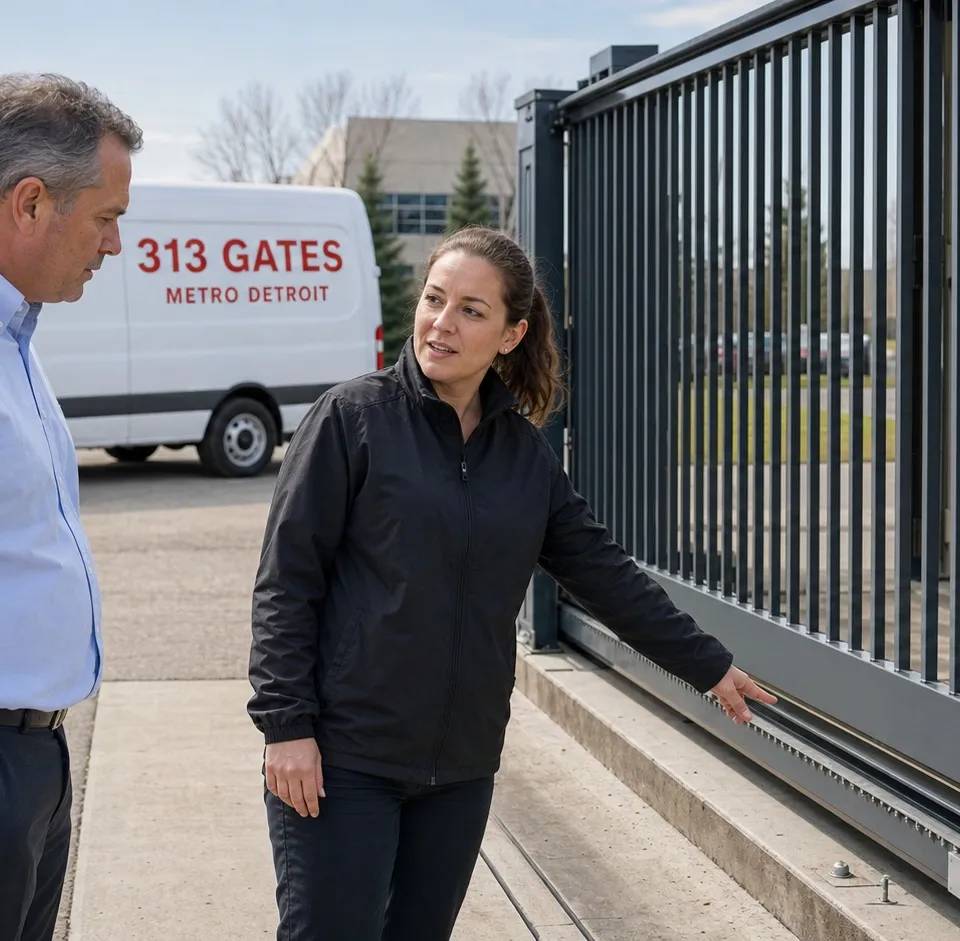
Commercial and perimeter gates control vehicle and pedestrian access at parking lots, gated facilities, and storefronts, most commonly through a boom-style barrier arm for vehicle entrances or a roll-up security gate for a building front. 313 Gates installs and repairs both systems across Metro Detroit for property managers, facility managers, and business owners.
Two ways to control a commercial entrance
| Gate type | Best for | Typical setup |
|---|---|---|
| Parking barrier gates | Parking lots, garages, and gated facilities controlling vehicle flow | Boom or barrier arm paired with a card reader, keypad, or ticket system |
| Security gates | Storefronts and commercial properties needing after-hours coverage | Roll-up or coiling gate over doors and window fronts |
Most commercial properties need one of these two systems, or both, depending on whether the entrance is a vehicle lane or a building front.
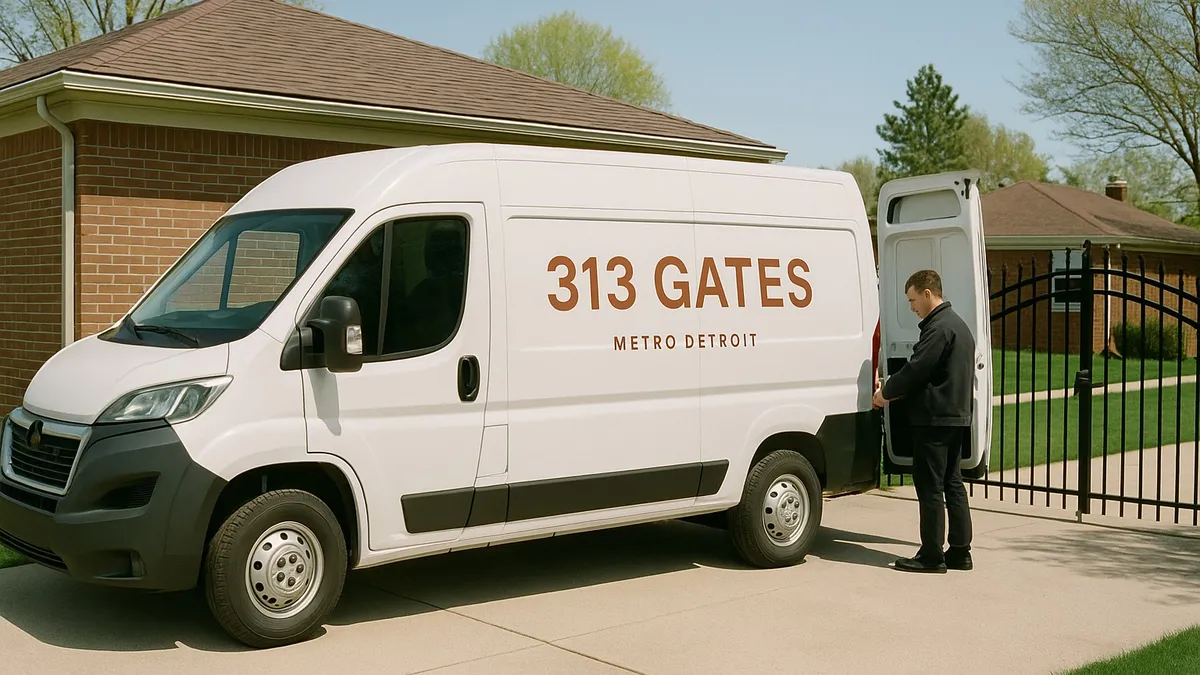
A branded fleet on every job.
Every 313 Gates technician arrives in a marked vehicle, so your facility team always knows who is on site before the gate opens.
How a service call goes.
Questions, answered.
What's the difference between a parking barrier gate and a security gate?
A parking barrier gate is a boom-style arm that controls vehicle access to a lot, garage, or gated facility, typically paired with a card reader, keypad, or ticket system. A security gate is a roll-up or coiling gate that covers a storefront's doors and windows, providing after-hours coverage for a business front. Most commercial properties need one or the other, and some need both.
Do you install access control alongside commercial gates?
Yes. Card readers, keypads, and video intercom are commonly wired into commercial barrier arms and security gates on the same visit, so vehicle and pedestrian access can be managed from one system. See access control installation for the full hardware range.
Can you handle multiple entrances at one commercial property?
Yes. Multi-lane parking facilities, campuses with several gated entrances, and multi-tenant commercial properties are common scope for 313 Gates, and a single visit can cover several entrances rather than requiring a separate call for each one.
Do you work with property managers, or only business owners?
Both. 313 Gates coordinates directly with property managers and facility managers on quoting, scheduling, and site access, which is how most commercial gate work actually gets managed, alongside working directly with business owners on storefront-specific projects.
Do commercial gate operators need to meet a safety standard?
Yes. Automated commercial gate operators, barrier arms included, are covered by UL 325, the safety standard requiring entrapment-protection devices and third-party listing on the operator itself. See the UL 325 gate safety standard for what it actually requires and why it matters when vetting an installer.
Parking Barrier Gates vs. Security Gates: Choosing the Right System
The two commercial gate types solve different problems and rarely substitute for each other. A parking barrier gate manages vehicle flow into a lot, garage, or gated facility, raising and lowering a boom arm for each authorized vehicle, and works alongside a card reader, keypad, or ticket dispenser. A security gate is a roll-up or coiling gate that covers a storefront’s doors and windows when the business is closed, protecting the building front rather than controlling a vehicle lane.
Why Commercial Sites Need Different Scoping Than Residential Gates
Commercial and perimeter gates run more daily cycles than a residential driveway gate, and they’re more likely to carry access control equipment tied directly into the operator, a card reader, keypad, or ticketing system rather than a simple remote. That combination changes how a site gets scoped: a technician walking a commercial property checks vehicle lane widths, expected daily traffic, and any existing access hardware, not just the gate itself. Commercial gate repair covers the maintenance and repair side once a system is in place, and gate intercom and video entry systems covers the visitor-entry layer many gated commercial properties add on top of a barrier arm or security gate.