Access Control Installation for Gates and Doors
One gate, one door, or a full property. Tell us the scope and we'll spec the right hardware.
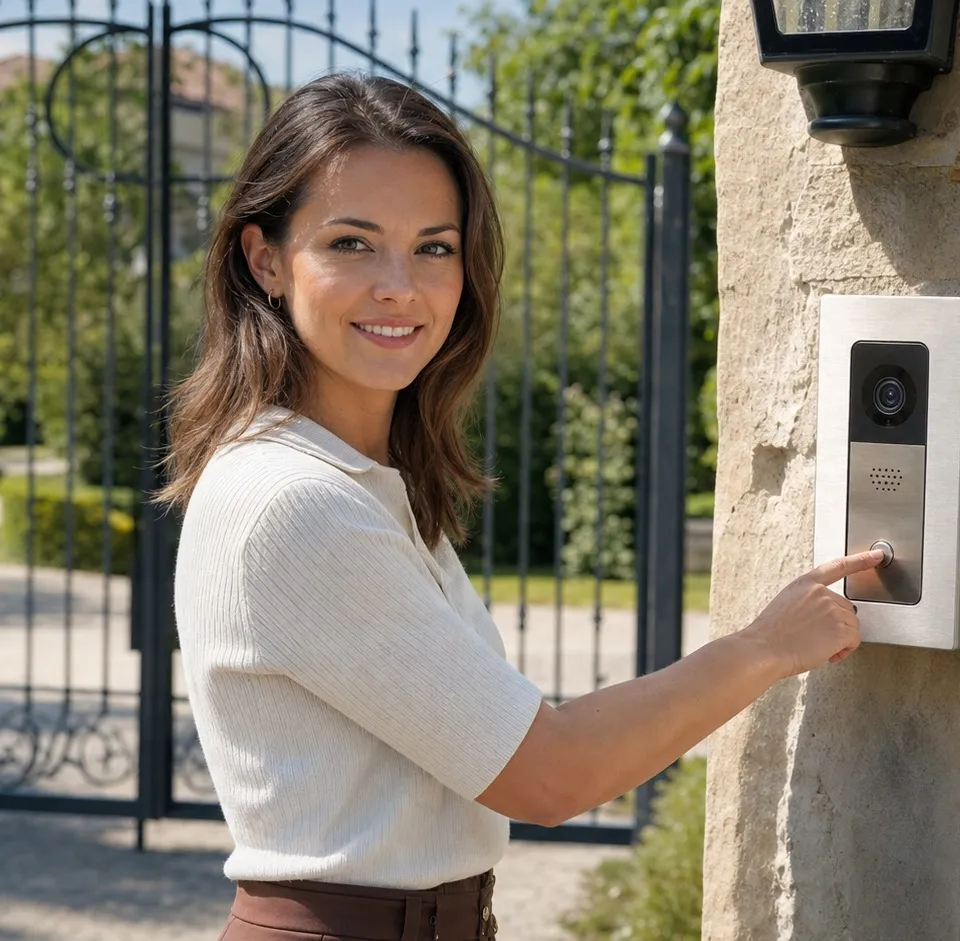
313 Gates installs access control for gated properties and commercial buildings across Metro Detroit: keypads, card and fob readers, magnetic locks, and camera-equipped video intercom, wired into the gate or door hardware you already have. Systems scale from a single residential gate to a multi-door commercial property managed from one panel.
Sound familiar?
What access control installation typically costs
| Scope | Typical setup | Typical national range |
|---|---|---|
| Single gate or door | One reader or keypad, one control point | $2,000 to $5,500 |
| Multi-door commercial | Reader or keypad per door, tied to a shared panel | $3,000 to $5,000 per door |
National figures for card reader, keypad, and mag lock installation. Your quote is scoped to your property's actual door or gate count and the hardware you choose, confirmed on-site.
How a service call goes.
Questions, answered.
What's the difference between single-door and multi-door access control?
A single-door system controls one gate or entrance on its own, usually with a standalone keypad or reader. Multi-door systems tie several entrances to one panel, so credentials, schedules, and entry logs are managed from a single place instead of separately at each gate.
Do you install magnetic locks, or only card readers and keypads?
Both. 313 Gates installs magnetic locks alongside card readers and keypads, and specs which combination fits a given door or gate, since mag locks and readers serve different roles in the same system.
Can I add a camera or video intercom to my gate or door access system?
Yes. Camera-equipped video intercom is one of the most requested add-ons: it lets you see and talk to a visitor before granting entry, from a phone app or an in-home panel, and pairs with keypad or card access on the same gate.
How much does access control installation cost?
A single gate or door typically runs $2,000 to $5,500 nationally, depending on hardware. Multi-door commercial installs typically run $3,000 to $5,000 per door once labor and setup are factored in. Your quote is confirmed after a property walk-through.
Do you install access control on commercial properties and HOAs, or just single-family homes?
313 Gates installs access control across all three: single-family driveway gates, HOA and gated-community entrances, and commercial or multi-tenant properties needing per-user credentials and entry logs.
Can access control be added to a gate that already has an opener?
In most cases, yes. Keypads, card readers, and video intercom typically wire into the existing gate operator rather than requiring a new one, so an already-automated gate doesn't need to be replaced to add access control.
Single door vs. multi-door: what actually changes
The core difference is whether entry points share one system or each run independently. A single-door setup puts a keypad or card reader on one gate or door, standalone, with no shared management. A multi-door setup ties every entrance, gate, side door, and gate arm, to one panel, so credentials, schedules, and entry records live in one place instead of scattered across separate boxes.
Card readers, keypads, and video intercom: choosing the right entry method
Keypads are the simplest and cheapest option: a numeric code, shared or per-user, with no card to lose. Card and fob readers add individual credentials that can be revoked without changing a shared code for everyone else, which matters most for rental and commercial properties with regular turnover. Camera-equipped video intercom adds a visual layer on top of either: you see and speak with a visitor from a phone or an in-home panel before deciding whether to let them in, which is the option most requested for gate intercom systems with a camera.
None of these are mutually exclusive. A common setup pairs a card reader for residents or staff with a video intercom for visitors and deliveries, all tied into the same gate. Smart gate retrofit covers the app-control side of that same upgrade if remote access from a phone matters as much as the physical hardware.