Farm and Ranch Gate Installation
Wider openings, heavier hardware, and materials built for daily livestock and equipment traffic. Free on-site assessment, firm quote before any work starts.
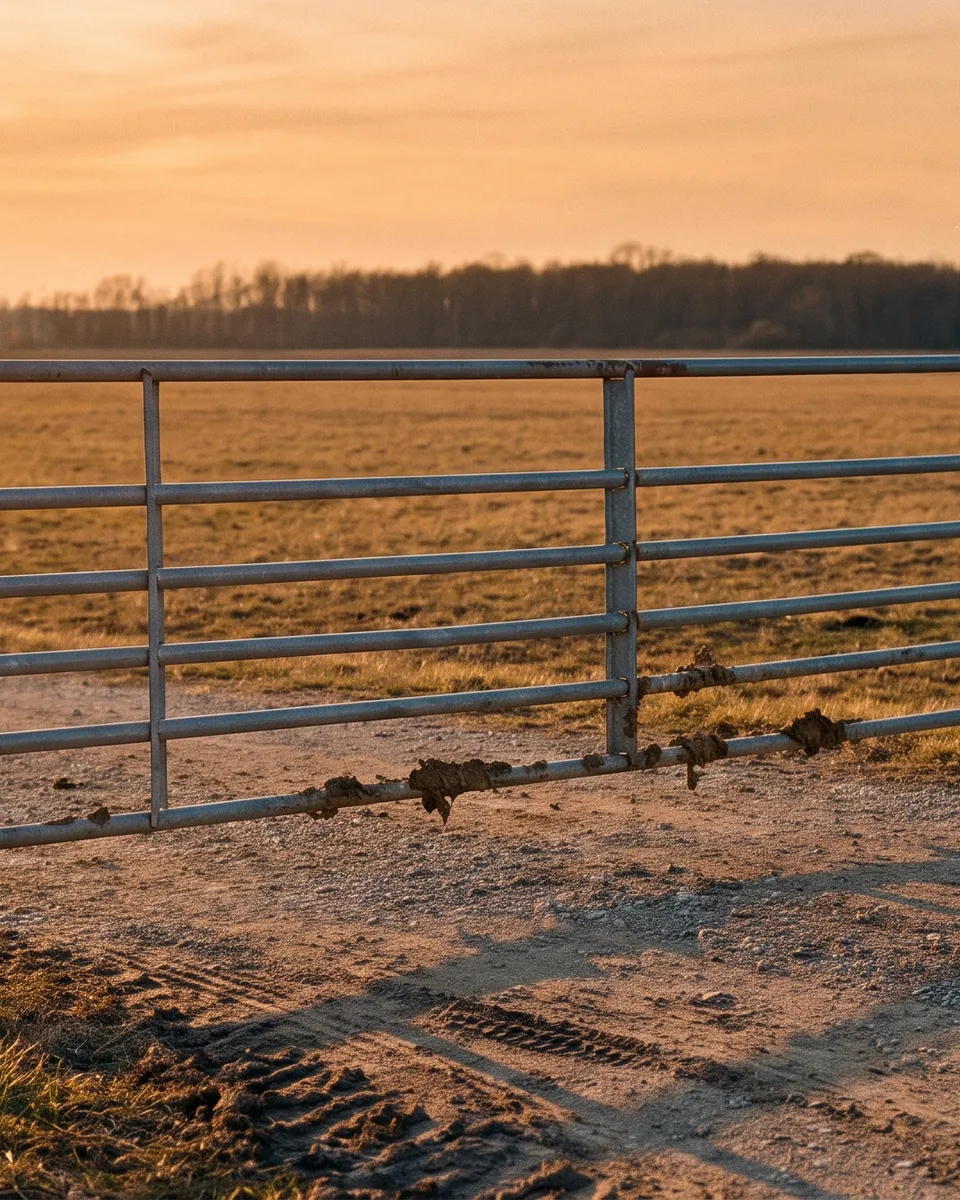
313 Gates installs and repairs farm, ranch, and livestock gates across Metro Detroit, from 10-foot walk gates to 20-foot cattle and galvanized panel gates built for daily equipment and livestock traffic. Rural and semi-rural properties on the outer edge of the metro, Washtenaw, Livingston, and Lapeer County farms among them, need a different gate than a suburban driveway: wider openings, heavier hardware, and a material that shrugs off mud, snow, and daily wear. The right length and gate type depends on what's moving through the opening, covered in the sizing guide below.
Farm and ranch gate sizing, 10ft to 20ft
| Length | Common gate type | Typical use |
|---|---|---|
| 10 ft | Walk-through or single equipment gate | Garden, kennel, or small paddock access |
| 12 ft | Single-panel farm gate | Standard driveway or field entrance for most single vehicles |
| 14 ft | Single or split cattle gate | Wider equipment access, tractors and mid-size trucks |
| 16 ft | Cattle or livestock gate | Livestock handling areas and wider field entrances |
| 20 ft | Galvanized double or cantilever-style gate | Full-width driveway or heavy equipment entrances |
Lengths below are the most common increments installed across Metro Detroit's outer counties. Exact sizing is confirmed against your opening and what needs to move through it.
How a service call goes.
Questions, answered.
What size farm gate do I need?
It depends on what's moving through the opening. A 10 to 12 foot gate handles a single vehicle or walk-through access, 14 to 16 foot gates suit tractors and livestock handling areas, and 20 foot gates cover full-width driveways or heavy equipment entrances. See the sizing table above, or the full sizing guide for a longer breakdown.
What's the difference between a farm gate and a cattle gate?
The terms overlap in everyday use, but a cattle gate typically refers to heavier tubular construction built to hold livestock in under pressure, while 'farm gate' is a broader term covering any gate on a rural property, including lighter equipment or driveway gates.
Should a farm gate be galvanized steel or wrought iron?
Galvanized steel is the more common choice for working farm and livestock gates since it's built for function and holds up to daily use and weather at a lower cost. Wrought iron suits a farm entrance meant to also make a design statement. See custom wrought iron gates for the heavier, more decorative option.
Can a farm gate be automated with an opener?
Yes, for gates used often enough to justify it, typically a driveway entrance rather than an interior pasture gate. A wider farm gate needs an opener sized to its weight and span. See gate motor replacement for how heavier operators are matched to larger gates.
Do you install gates on rural properties outside the main service cities?
Yes. Farm and ranch gates are common on the outer edge of 313 Gates' Metro Detroit service area, including Washtenaw, Livingston, and Lapeer County properties, not just the denser suburbs closer to Detroit.
Do you repair sagging or storm-damaged farm gates?
Yes. Wide farm gates put more strain on hinges and posts than a standard driveway gate, so sagging, dragging, or storm damage is a common repair call, diagnosed and fixed on-site rather than assumed over the phone.
Choosing a Farm Gate Material
Working farm and livestock gates are most often galvanized steel, chosen for cost and durability over years of daily use, while custom wrought iron suits a farm entrance meant to double as a design statement. Wood plank gates still show up on smaller properties but need the most seasonal upkeep against Michigan moisture.
Material choice comes down to whether the gate is doing daily working duty in a pasture or standing at a front entrance where it’s seen every day.
Sizing a Gate to What’s Moving Through It
Gate length isn’t a style choice on a working farm, it’s set by the widest piece of equipment or the number of animals that need to pass through at once. A gate sized for a single truck won’t clear a loaded trailer, and a gate sized for foot traffic won’t hold cattle under pressure.
The sizing table above covers the most common lengths installed across Metro Detroit’s outer counties. The full sizing guide breaks down every increment from 10 to 20 feet in more detail, including which gate type fits each one.
Setting Posts for a Wider Span
A 16 or 20 foot farm gate puts far more leverage on its posts than a residential driveway gate does, which means post depth and footing size matter more here than almost anywhere else in gate installation. A post set for a 6 foot residential gate will lean or fail under a wide farm gate’s weight within a season or two.
313 Gates sizes posts and footings to the actual gate length and expected traffic, not a one-size post spec pulled from a smaller residential job.
More span means more leverage, and a post spec sized for a 6-foot residential gate was never built to carry it.
Farm Gates and Michigan Weather
Michigan’s freeze-thaw cycle affects farm gate posts the same way it affects any gate post: frost heave pushes on footings through the winter and can leave a gate scraping or a post leaning by spring. Wider farm gates feel this more than a standard driveway gate because there’s more weight and leverage riding on each post.
Mud season adds a second seasonal problem. A gate that swings clear in summer can drag through soft, saturated ground each spring until the opening is regraded or the gate is reset higher on its hinges.
Repair or Replace: What a Sagging Farm Gate Usually Needs
A sagging or dragging farm gate is almost always a hinge, post, or footing problem rather than a reason to replace the whole gate, especially on heavier galvanized construction built to last for years. Full replacement makes more sense when the frame itself is bent beyond straightening or rusted through at structural points.
A technician makes that call on-site after checking the frame, hinges, and posts, not by guessing from a description over the phone.