Pedestrian Gate Installation and Access
A dedicated walk-through gate beside your driveway system, so foot traffic doesn't have to trigger the whole gate. Keypad and card access available.
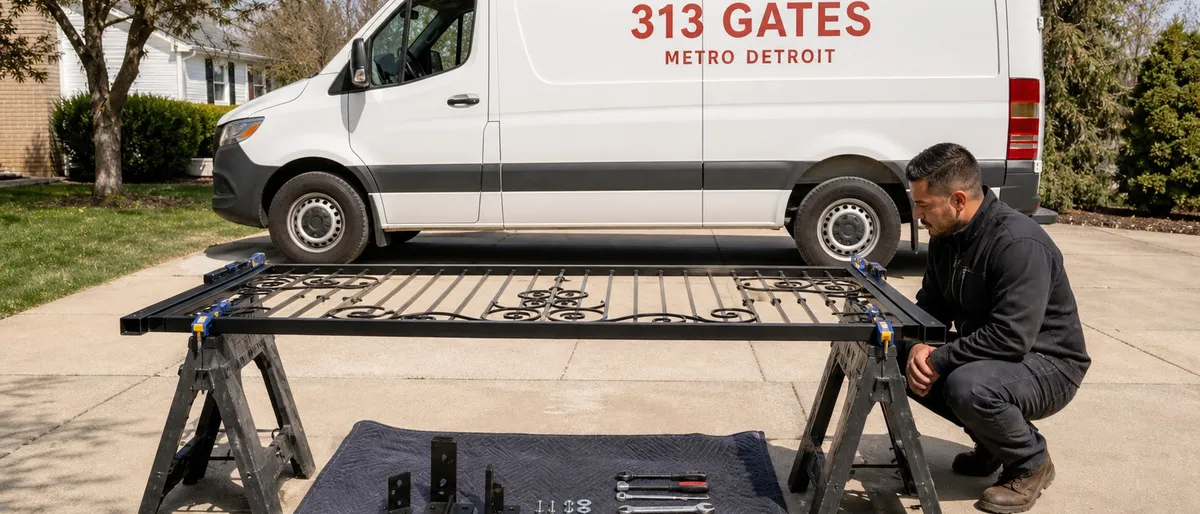
A pedestrian gate is a smaller walk-through gate, usually swinging on a single hinge, installed beside or built into a driveway gate system so people can enter and exit on foot without opening the full vehicle gate. 313 Gates installs pedestrian gates as standalone additions to an existing driveway gate or as part of a new installation, with keypad, card, or intercom access built in.
One visit, start to finish.
Where a Pedestrian Gate Actually Earns Its Cost
The case for a pedestrian gate is mostly about wear and convenience, not security alone. A driveway gate that opens and closes every time a resident walks the dog or a package gets delivered is a driveway gate that’s cycling far more often than its opener was really sized for, and every one of those extra cycles is wear on hinges, tracks, and the motor itself. Routing foot traffic through a lighter, purpose-built walk-through gate instead takes that load off the swing gate or slide gate handling vehicles, while still keeping the property secured.
Every extra cycle on a driveway gate opener for foot traffic is wear the vehicle gate wasn’t really sized for.
Pairing a Pedestrian Gate With Access Control
A pedestrian gate is also the natural spot to put visitor-facing access control, since it’s the entry point most people actually approach on foot before ever reaching the driveway gate itself.
Gate intercom and video entry systems covers how that layer gets added to a pedestrian gate, whether it’s a new install or paired onto an existing gate.
Questions, answered.
Why install a separate pedestrian gate instead of just walking through the driveway gate?
A driveway gate is sized and geared for vehicle traffic, which makes it slower and less convenient for someone walking in on foot, whether that's a resident, a delivery, or a dog walker. A dedicated pedestrian gate opens faster, wears less on the driveway gate's opener over time, and can carry its own access method separate from the vehicle system.
What access control options work with a pedestrian gate?
Keypad codes, proximity cards or fobs, and video intercom entry all pair with a pedestrian gate, and more than one method is common on the same gate, a keypad for residents and an intercom buzzer for visitors, for example. See gate intercom and video entry systems for how that pairing works in more detail.
What material is typical for a pedestrian gate?
Aluminum is a common choice for pedestrian gates specifically, since it's lighter to swing by hand or with a smaller opener, resists rust, and is easy to match in style and finish to an existing driveway gate. See aluminum gates for the material comparison in more depth.
Can a pedestrian gate be added to a driveway gate system that's already installed?
Yes, adding a pedestrian gate alongside an existing driveway gate is a common standalone project and doesn't require touching the driveway gate itself, provided there's a reasonable spot for a new post and hinge along the property line.